Safe bonfire nights at lakefront cottage rentals in Ontario start with checking local burn bans, using designated fire rings, and keeping extinguishing supplies within reach. This guide covers fire setup, Ontario fire regulations, seasonal considerations, and what Cottage Vacations provides to help renters and owners manage bonfire nights with confidence.
Is a Bonfire Allowed at Your Ontario Cottage Rental?
Before lighting any fire at a lakefront cottage rental in Ontario, confirm that campfires are permitted on the property and in the municipality that day. Ontario burn bans are issued by the Ontario Ministry of Natural Resources and Forestry (MNRF) and can change within hours during dry, windy conditions, particularly in summer across Muskoka, Haliburton, Kawarthas, and Georgian Bay.
How to confirm fire permissions before you start:
- Review your rental property welcome package or guest handbook for the owner’s fire policy
- Look for posted signage on the property indicating approved fire areas and restrictions
- Check the province’s interactive forest fire map, updated by MNRF for all regions, including current restricted fire zones
- Contact your Cottage Vacations property contact for the most current local advisory
Find lakefront cottage rentals in Ontario with confirmed firepit access through our Muskoka listings.
How Do You Build a Safe Campfire at an Ontario Cottage?
Building a safe cottage bonfire requires choosing the right location, using the right materials, and keeping the fire at a manageable size throughout the evening. These are not just best practices, Ontario’s fire safety standards set specific requirements for recreational fires on private property.
Choosing Your Fire Location
Location selection is the single most important safety step. Using an approved spot eliminates most of the risk before the fire even starts.
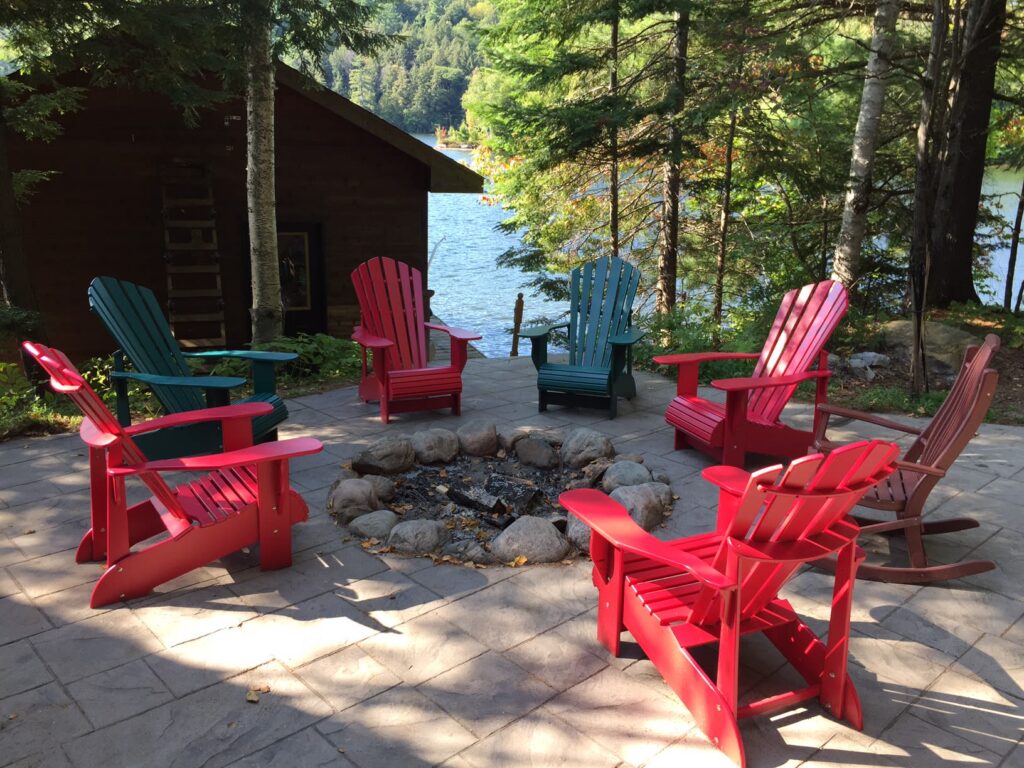
- Use only designated firepits or approved fire rings, never create a new fire site on bare ground
- Clear dry leaves, pine needles, and debris within 2 metres of the pit before lighting
- Keep your fire at least 10 metres from buildings, vehicles, and overhanging branches (Ontario Fire Code standard)
Building and Maintaining the Fire
A properly built fire stays contained and is easier to extinguish completely at the end of the night.
- Use clean, dry, untreated wood only, never burn garbage, treated lumber, plywood, or plastics
- Stack small kindling in a teepee or log-cabin shape; add larger pieces gradually as the fire stabilizes
- Keep flames below 1 metre in height, a manageable fire is easier to monitor and extinguish
- Never use accelerants including gasoline, lighter fluid, or charcoal starter on a wood bonfire
Managing the Evening
A campfire that is actively supervised and properly wound down at the end of the night eliminates most post-fire risk.
- Keep a bucket of water, a working garden hose, or dry sand within reach of the fire at all times
- Monitor wind direction throughout the evening, embers travel further than most people expect
- Respect posted quiet hours; in most Ontario cottage municipalities, fires should be fully extinguished before 11 p.m.
See our finding the right cottage guide for properties with detailed fire and amenity disclosures.
What Are the Fire Safety Rules Renters Should Follow at an Ontario Cottage?
Renters at a lakefront cottage rental in Ontario are responsible for following both the property owner’s fire policy and any active municipal or provincial burn restrictions. Cottage Vacations provides clear property-specific guidelines in every guest package so renters are not left guessing.
Renter fire safety checklist:
- Supervise children and pets at all times when a fire is burning, no exceptions
- Never leave a lit fire unattended, even briefly
- Fully extinguish the fire before going inside: pour water slowly, stir the embers, pour again until the hissing stops completely and the ash is cool to the touch
- Allow ash to cool for a minimum of 24 hours before handling or bagging
- Dispose of cooled ash in a designated metal container only, never in plastic bags or organic waste bins
- Report any property fire equipment issues (damaged pit, missing extinguisher) to your property contact before using the firepit
Booking through Cottage Vacations means every property listing includes an accurate fire policy. Browse Ontario rentals with confirmed firepit details.
How Should Cottage Owners Prepare Firepits for Rental Guests?
Cottage owners who prepare their firepit areas with care and document those preparations in the listing attract better guests and fewer post-stay disputes. A well-maintained, clearly described fire area signals the kind of transparency that builds long-term rental trust.
Owner firepit preparation checklist:
- Inspect the firepit and surrounding area at the start of each rental season and after each guest stay
- Provide a functioning fire extinguisher within reach of the pit, visibly accessible to guests
- Supply clear written instructions for fire use, extinguishing, and ash disposal inside the cottage
- Clear overhanging branches and trim back any vegetation within the 10-metre clearance zone annually
- Ensure the driveway and entry paths have exterior lighting for safe early-morning and late-night access
- Consider adding Adirondack seating, a firewood storage area, and grilling grates to increase listing appeal
Firepit-ready listings on Cottage Vacations include verified amenity details, so guests know exactly what to expect before they arrive. Owners who list with us receive full support with seasonal updates, guest screening, and property care.
Learn how our property management program keeps your listing accurate and your firepit guests informed.
What Fire Safety Precautions Change by Season at Ontario Cottage Rentals?
Ontario’s fire risk profile shifts significantly between summer and fall, and the safety steps renters and owners should take shift with it. Understanding what changes and when helps both audiences stay ahead of restrictions.
Summer: Burn Bans and Dry Conditions
Summer is peak burn-ban season in Ontario. The MNRF issues fire restrictions across cottage country when temperature, wind speed, and relative humidity reach threshold levels, sometimes for multi-day windows without advance notice. The Office of the Fire Marshal also publishes provincial fire prevention guidance that applies alongside any local municipal bylaw, such as those maintained by the District Municipality of Muskoka.
- Check the MNRF fire ban map before every fire, even if a fire was permitted the previous evening
- Avoid fires on high-wind evenings, a 1-metre flame on a calm night can throw embers 3–5 metres in wind
- Keep a charged hose or full water buckets ready any time a fire is burning in summer months
Fall: Leaf Accumulation and Low Visibility
Autumn brings dry leaf accumulation around firepits, which creates a flash-ignition risk that summer conditions rarely produce. Shorter days also mean guests arrive at and depart from the firepit area in the dark.
- Rake and clear the firepit zone of leaves before every fire in fall, even if you cleared it the day before
- Use solar-powered or hardwired path lighting from the cottage to the firepit for safe night navigation
- Extinguish fires earlier in fall evenings to allow full cool-down before dark walking conditions
Check winter availability for seasonal cottage options with year-round amenity access.
Plan a Safe Bonfire Night at Your Ontario Lakefront Cottage Rental
A well-prepared campfire is one of the most consistent highlights of a cottage stay in Ontario. When the fire is in a proper pit, the wood is dry, extinguishing supplies are within reach, and burn bans have been checked, there is nothing left to worry about. That is the standard every Cottage Vacations listing is built to support.
Renters get accurate amenity details, clear fire policies in every guest package, and a property contact available for any questions. Owners get a full-service management partner who keeps listings transparent, guests accountable, and properties protected through every season.
Book a Firepit-Ready Ontario Cottage
Browse verified lakefront cottage rentals in Ontario with confirmed firepit amenities through our Muskoka, Haliburton, Kawarthas, and Georgian Bay listings, or reach out to the Cottage Vacations team to discuss your dates and property needs.
Frequently Asked Questions
1. How do I check if there is a fire ban at my Ontario cottage rental?
Ontario burn bans are issued by the Ontario Ministry of Natural Resources and Forestry (MNRF) and posted on the Ontario government’s fire ban map, available at ontario.ca. Bans apply by fire district and can change daily. Always check the map before lighting any fire at your lakefront cottage rental in Ontario, and contact your property manager if you are unsure whether the ban applies to your specific location. Browse our common questions for more on what to confirm before your stay.
2. What is the minimum clearance required around a cottage campfire in Ontario?
Ontario’s fire safety standards require recreational fires to be at least 10 metres from any building, vehicle, or low-hanging branches. The immediate area within 2 metres of the firepit should be cleared of dry leaves, pine needles, grass, and any other combustible debris before lighting. These clearance standards align with Ontario Fire Code requirements for recreational fires on private property. Use our right cottage guide to confirm firepit placement and clearance details for any property before booking.
3. How do you completely extinguish a cottage bonfire?
Pour water slowly and steadily over the fire, stir the embers with a shovel or stick, then pour again. Repeat until the hissing stops completely and no steam rises from the pit. The ash and embers should be cool to the touch before you leave the area. Allow the ash to cool for a minimum of 24 hours before bagging or disposing of it in a metal container. Never assume a fire is out based on appearance alone. Browse Muskoka cottages for properties with properly maintained firepits and fire safety equipment confirmed on-site.
4. Can I have a bonfire at any lakefront cottage rental in Ontario?
Not all Ontario cottage rentals permit bonfires. Whether fires are allowed depends on the property owner’s policy, the type of firepit on site, and any active municipal or provincial burn bans. Cottage Vacations listings include accurate fire policy information so renters know before booking whether a firepit is available and what the rules are. If you have specific fire amenity requirements, contact the team to match you to a property that fits.
5. What should a cottage owner provide for bonfire-ready guests?
A fire-ready cottage should have a designated and maintained firepit at least 10 metres from any structure, a functioning fire extinguisher within reach of the pit, clear written instructions for use and extinguishing, and an ash disposal container. Owners should also provide current burn ban information, or a contact to call for updates, as part of the guest welcome package. Owners can rent your cottage with Cottage Vacations to have fire amenity details verified and accurately listed for every guest.
6. Are there specific rules for campfire ash disposal at Ontario cottages?
Yes. Allow ash and embers to cool completely for a minimum of 24 hours before handling. Transfer cooled ash to a metal container with a tight-fitting lid, never use plastic bags, cardboard, or organic bins, as residual heat can cause ignition. Dispose of the sealed metal container according to your municipality’s waste guidelines. Some Ontario municipalities require ash to be disposed of in a specific manner, so checking local rules before your stay is recommended, particularly in areas like the Kawarthas where regional waste bylaws apply.
Key Takeaways
- Every Cottage Vacations listing includes an accurate fire policy so renters know before they book whether a firepit is available and what the rules are.
- Always check the Ontario Ministry of Natural Resources and Forestry (MNRF) burn ban map before lighting any fire at a cottage rental, bans can change within hours during dry or windy conditions.
- Ontario fire safety standards require recreational fires to be at least 10 metres from buildings, vehicles, and low-hanging branches, with a 2-metre cleared zone around the pit.
- A campfire is fully extinguished when the ash is cool to the touch and no steam or hissing remains after water application, never assume it is out based on appearance.
- Ash must cool for at least 24 hours before disposal in a sealed metal container, plastic bags or organic bins are a fire risk.
- Summer is peak burn-ban season in Ontario; fall adds leaf-accumulation risk around firepits that requires clearing before every fire, even if the area was cleared recently.
- Cottage owners who provide working fire extinguishers, clear written instructions, and transparent listing amenities attract better guests and face fewer post-stay disputes.